
Guest Column by David Delano Blanco

A tuna caught off the California coast suffering from the effects of Fukushima Japan nuclear waste release into the Pacific Ocean
Exposure to high-energy particles, such as occurs after a nuclear power plant accident, can cause severe damage to living cells. The mechanism by which this occurs involves the collision of these particles with atoms in the cells — particularly atoms of oxygen. Oxygen atoms absorb some of the collision energy and are thereby put into a highly reactive state. Such energetically excited oxygen atoms then transfer their extra energy to chemical bonds of various kinds, causing destructive chemical reactions in proteins, DNA, lipids, and other biomolecules. Such altered biomolecules are then no longer able to function properly, and so the body’s tissues and organs malfunction. Such damage tends to be permanent, debilitating, and if severe enough will be fatal.
There is no effective overall treatment for radiation poisoning, although drastic measures like stem cell transplants can help to save lives in certain cases.
Until recently there was also no very effective method for preventing radiation poisoning other than avoiding exposure in the first place. However, in 2009 scientists at Vanderbilt University in the USA published a paper describing the use of pyridoxamine to block the cascade of events that starts with reactive oxygen and ends in damaged tissues. Pyridoxamine, it was shown, can neutralize reactive oxygen before it reacts with biomolecules. By preventing damage to biomolecules, it therefore prevents damage to tissues.
This does not mean that pyridoxamine fixes tissue damage that has already occurred. It does mean that if one is being subjected to continual radiation exposure, pyridoxamine can be used to decrease its damage to the body. Therefore:
- Pyridoxamine is the best known preventative for ongoing radiation poisoning.
Acute radiation syndrome Wikipedia website
————————-
My commentary:
Where can you get high quality Pyridoxamine:
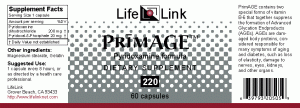 Dave Blanco is an old and dear friend of mine and runs his operation out of http://www.lifelinknet.com. Here is the direct link to his Pyridoxamine product:
http://lifelinknet.com/siteResources/Products/PrimAGE.asp
Google+


You must log in to post a comment.