
Representative Michelle Marie Bachmann’s recent use of John Quincy Adams as a so-called “founding father” who opposed slavery makes me suspect that most of what she knows about the early history of the United States of America is from movies. People who’ve seen the 1997 Spielberg movie Amistad would certainly know of John Quincy Adams’ pivotal role in seeking freedom for the Africans who took over the slave ship Amistad and eventually won their freedom in court. But born in 1767, it’s kind of hard to envision John Quincy Adams as a “founding father.” Certainly his father, John Adams, second President of the United States, would have qualified.
His own son, Charles Francis Adams, Sr. would later run for Vice President on the abolitionist Free Soil Party ticket and his grandson, Charles Francis Adams Jr., would go on to fight against slavery with distinction at Gettysburg and Antietam, eventually commanding African American cavalry troops as a brevet General in the Civil War.
However, there were a number of much better real “founding fathers” to choose to discuss who did fight against slavery.
Vice President Aaron Burr sponsored a bill in the New York legislature to abolish slavery, fathered two children with an African American woman, and was set up by President Thomas Jefferson for a treason trial (he was acquitted) over his plans to establish a haven in the western territories for slaves to flee to.
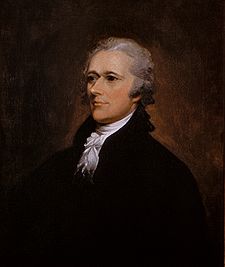
Alexander Hamilton
Alexander Hamilton, an artillery commander in the Revolutionary War at the age of 19, and first Secretary of the Treasury under President George Washington, was also an ardent abolitionist. His career and life came to an end when he was killed in a duel by fellow abolitionist Aaron Burr, Jr.
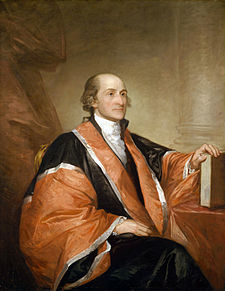
John Jay
John Jay served the American Revolution with distinction and eventually became Governor of New York, first Chief Justice of the United States, and the second Secretary of Foreign Affairs (now known as Secretary of State). While Governor of New York, he signed into law legislation that he had repeatedly fought for that abolished slavery in New York.
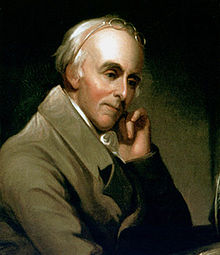
Benjamin Rush
Benjamin Rush was by religion a Universalist, a group that later merged with the Unitarian Church to become the Unitarian Universalist Association. During the Revolutionary War he served as Surgeon General of the Middle District of the Continental Army. He wrote, published and distributed one of the earliest pamphlets against slavery in 1773, entitled “An Address to the Inhabitants of the British Settlements in America, upon Slave-Keeping.”
The real question to modern day Americans is why do most people not know of the roles of these great abolitionists? Why were their names not on the tip of Michelle Bachmann’s tongue instead of the better known non-founding father John Quincy Adams? It is an indictment of education in America that these people’s contributions to the cause of freedom and liberty are practically unknown.
Frankly, I have trouble believing that all but a handful of members of the United States Congress, House and Senate included, could actually name which Founding Fathers of America were abolitionists and which ones weren’t…and that goes for both parties.

